
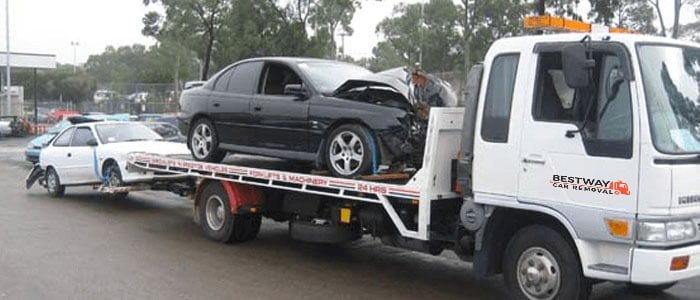
The moment the tow truck pulls out of your driveway with that old sedan or mangled SUV, most people feel a wave of relief. The eyesore is gone. The space in the garage is back. And if you’ve called us at Bestway Car Removals, you’ve probably got a decent stack of cash in your hand, too. But once that truck rounds the corner, what actually happens?
Most car owners have no idea where their vehicle goes. There’s a common assumption that scrap cars just sit in a rusted pile in some “car graveyard” until they eventually turn into dust. Or worse, people think they just get crushed immediately, fluids and all, and tossed into a hole in the ground. That couldn’t be further from the truth.
Understanding the journey of scrap car removal in Geelong matters because it’s not just about getting rid of “trash.” It’s a sophisticated industrial process. If you choose a licensed wrecker, your car becomes a primary source of raw materials for the global economy. If you choose an unlicensed “backyard” operator, it becomes an environmental hazard. The difference between the two is huge, both for the planet and for the transparency of the cash for cars industry. You actually play a massive role in this just by deciding who gets the keys.
Step One: Removal and the Initial Assessment
When our team arrives for an Old Car Removals job, we aren’t just there to hook up a chain and leave. There’s a lot of data we’re processing on the spot. Before we even show up, we’ve already asked about the make, model, and general condition, but the on-site assessment is where the “real” journey starts.
We look for specific things. Is the catalytic converter still there? (That’s where the precious metals live). Is the engine seized, or could it be refurbished? Some cars are assessed on-site because they might still have high-value components that need careful handling during the tow. Others, like those involved in heavy collisions, might go straight to a different processing stream.
Even if a car is “worthless” in terms of driving, its condition still dictates our workflow. A car leaking oil everywhere requires immediate containment before it even touches our truck. We have to check for hazardous materials—leaking batteries or damaged fuel lines—right then and there. We take this seriously because we’re a licensed team, not just a guy with a trailer. We need to know if we’re transporting a simple hunk of steel or a potential environmental spill on wheels.
Arrival at the Scrap Yard: Sorting and Staging
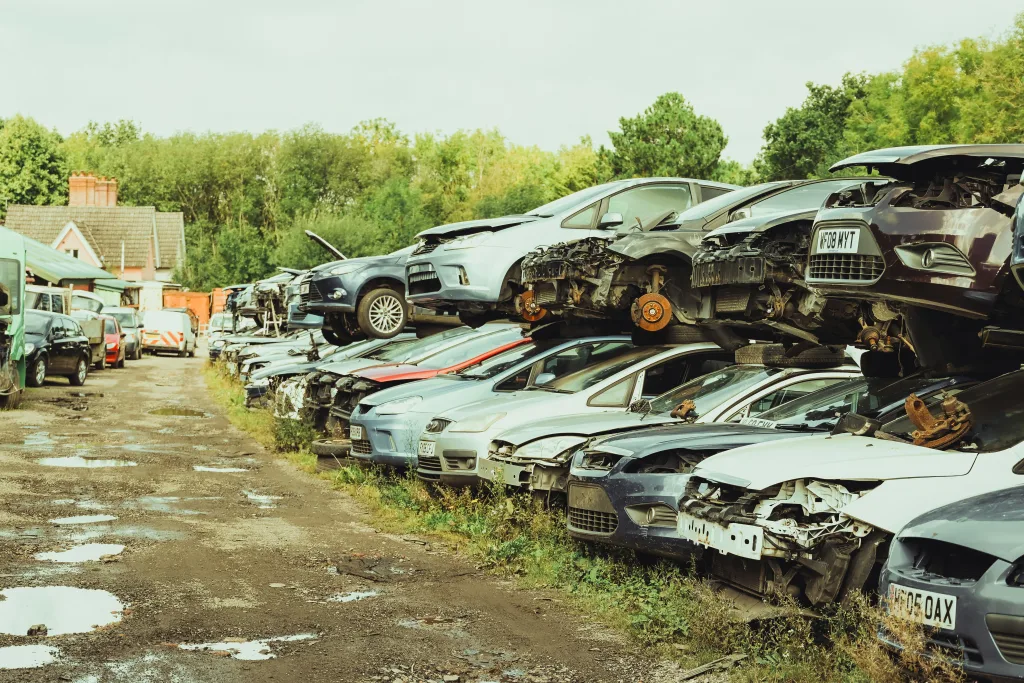
Once the car arrives at our facility, the chaos people expect is nowhere to be found. A professional scrap yard is organised by zones. Think of it like a reverse assembly line. Instead of putting parts on, we’re strategically deciding how to take them off.
A car’s “wait time” in the staging area depends on what it is. If we have a high-demand model—say, a popular Toyota or a common work ute—it might get fast-tracked for dismantling. We prioritise vehicles with reusable components because the faster those parts get back into the ecosystem, the better.
Cars damaged by fire or floods are handled differently. They often go into a “safety zone” where they’re inspected for hidden hazards before they join the main line. It’s a systematic approach. We don’t just pile them up; we stage them so our wreckers can work through them without wasting time or risking safety.
Fluid Drainage and Hazardous Material Removal
This is arguably the most important stage of car recycling in Geelong. We call it “depollution.” You can’t just go around crushing cars that still have five litres of old oil and a tank full of petrol.
Before a single piece of metal is twisted, we drain every single fluid. This includes engine oil, transmission fluid, coolant, brake fluid, and even the refrigerant from the air conditioning system. These fluids are the biggest environmental risks. If they leak into the soil or the Geelong water table, the damage is long-lasting.
But we don’t just “dump” them. We’re licensed by the Victorian government, which means we follow strict EPA guidelines. Oils are often refined and reused. Coolants are processed. Batteries are pulled and sent to specialised recyclers who can recover the lead and acid. We even deal with the mercury switches and airbags, which are explosive hazards if handled incorrectly. By doing this properly, we’re making sure your old car doesn’t leave a toxic legacy.
Parts Salvaging: What Gets Reused and Why
This is where the “value” of your scrap car truly shines. Even in a car that looks like a total loss, there are usually gems inside. We’re looking for anything that can live a second life.
Engines and gearboxes are the big ones. If they’re in decent shape, they’re tested, graded, and sold as refurbished units. This is a huge win for sustainability. Think about the energy required to mine iron ore, smelt it, and manufacture a brand-new engine block. By reusing an existing one, we’re skipping that entire carbon-heavy process.
Beyond the big components, we look at starters, alternators, doors, and even light assemblies. When we handle Van, Ute and 4WD Removal, we often find that the trays or specialised racks are still perfectly functional. We test these parts to ensure they’re safe for resale. If it’s not up to scratch, it’s marked as scrap metal, but if it passes, it goes back into the market, keeping other cars on the road for longer and at a lower cost to other drivers.
Depolluted Shell Processing: Crushing or Shredding
Once the car is a “clean” shell—no fluids, no engine, no high-value parts—it’s finally ready for the heavy machinery. You’ve probably seen videos of car crushers, but there’s a difference between crushing and shredding.
Crushing is mostly for transport. It turns a car into a flat “pancake” or a bale so we can fit more of them onto a truck. Shredding, however, is the high-tech part. The shell is fed into a massive industrial shredder that tears it into fist-sized chunks in seconds.
During this process, magnets and “eddy current” separators are used to pull out the different types of metal. Steel is the easiest to catch with magnets, and since cars are mostly steel, this is where the bulk of the recycling happens. But we also pull out aluminum, copper, and brass. It’s a fast, loud, and incredibly efficient way to turn a “car” back into “raw material.”
What Happens to the Non-Recyclables?
We have to be honest here—not every single gram of a car can be recycled yet. There’s something called “Auto Shredder Residue” (ASR), often referred to as “fluff.” This consists of bits of foam from the seats, certain plastics, carpets, and fragments of glass.
Historically, this stuff went straight to the landfill. However, things are changing. Modern recyclers are finding ways to turn some of this residue into fuel or industrial filler. We’re constantly looking for ways to reduce the amount of waste that leaves our yard. Transparency is important; while we can’t save every bit of upholstery, our goal is to get as close to zero waste as the current technology allows.
Environmental Impact: Why It Matters
The environmental stakes are high. If an old car is left to rot in a field, it’s a ticking time bomb. Lead from batteries, mercury from sensors, and leftover fuel will eventually find their way into the ecosystem.
Responsible Free Car Disposals prevent this. Beyond preventing pollution, the energy savings are staggering. Recycling one ton of steel saves 1,100kg of iron ore and 630kg of coal. When you multiply that by the thousands of cars we process in Geelong every year, the impact is massive. We’re helping build a circular economy where “end-of-life” just means “start-of-a-new-purpose.”
What This Means for You
As a car owner, you’re the first link in this chain. Choosing a reputable recycler like Bestway Car Removals means you’re ensuring this entire process happens the right way.
Watch out for red flags. If someone offers you “cash for cars” but doesn’t care about the paperwork or doesn’t have a licensed facility, they might just be stripping the high-value bits and dumping the rest in a way that harms the environment. They might even leave you legally liable if the car isn’t “disposed of” correctly in the eyes of the law.
Ask questions. Ask where the car is going. Ask if they are licensed wreckers. Informed scrapping protects your wallet, your legal standing, and the environment.
From the End of the Road to a New Beginning
A scrap car isn’t waste; it’s a resource waiting to be unlocked. Your old, beat-up vehicle—even if it’s an Accident Car Removals case—is going to contribute to future products you’ll likely use every day.
At Bestway Car Removals, we take pride in being the bridge between “junk” and “resource.” It’s a journey that matters more than most people realize, and we’re glad to be the ones in Geelong making sure it’s done with integrity.
